In case of emergency, technical and organisational measures are in place in order to ensure the proper response at CMS. The main objectives of this plan consist of the following:
- Protect people above all other considerations.
- Protect the environment.
- Maintain safe and continuous CMS operation.
- Avoid/minimize the consequences of emergency situations.
- Protect CMS reputation.
- Ensure alignment with CERN emergency services
CMS Emergency Preparedness and Response: EDMS CMS-0000011435
Do you want to support? Have a look to the “Take Part!” section to support as Emergency Guide, First Aider, etc!
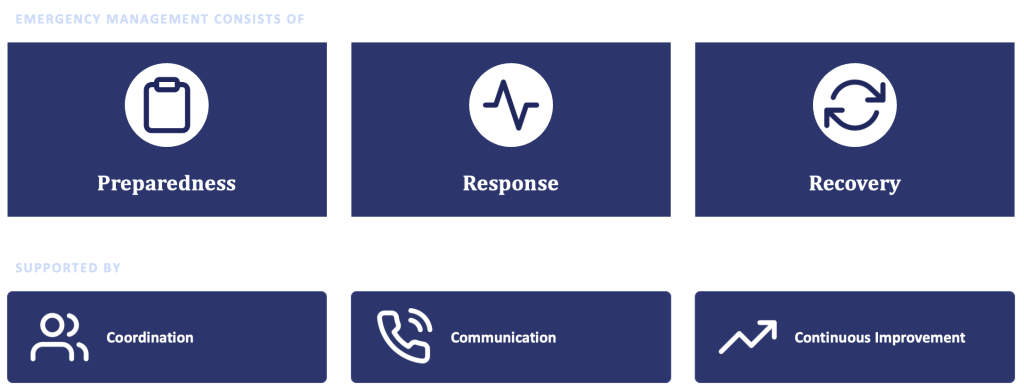
CMS has established an Emergency Management Team (EMT) framework to coordinate the Experiment’s response to emergency situations and support the intervention of CERN emergency services.
The framework provides a clear command structure, defined responsibilities and a structured process covering detection and notification, assessment, activation, operational response, information management, coordination and recovery.
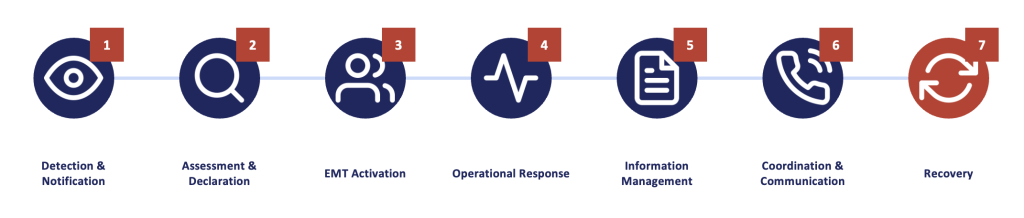
The CMS EMT is designed to be scalable according to the severity of the event and works in close coordination with the CERN Fire and Rescue Service, HSE, CERN Crisis Management and other relevant CERN services.
During an emergency, priority is given to protecting people and the environment, controlling the situation and placing affected systems in a safe state. CMS provides the technical expertise, operational information and resources necessary to support CERN emergency responders.
For major events, the response can progressively escalate from local CMS management to the wider CERN emergency and crisis-management framework.
CMS maintains a structured training and exercise programme to ensure that personnel and emergency roles are prepared to respond effectively.
Activities include general emergency awareness, role-specific and specialist training, refresher sessions, planned evacuation, alarm-response exercises and emergency simulations.
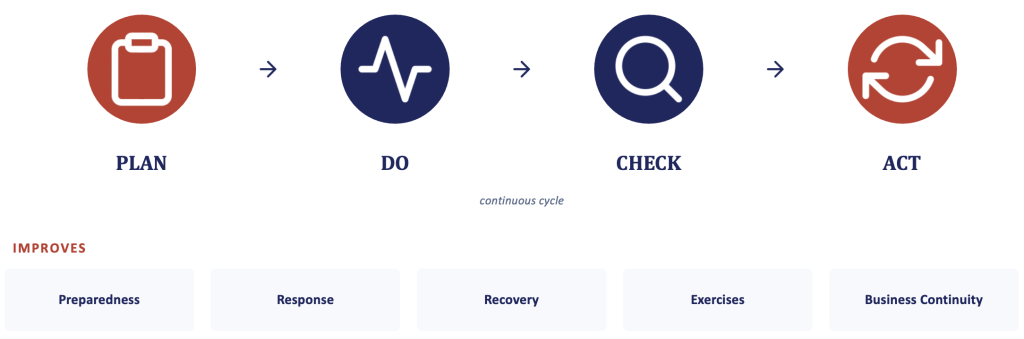
Following exercises or significant events, CMS conducts debriefings and reviews to identify lessons learned and improvement actions. These are incorporated into procedures, training and future exercises through a Plan–Do–Check–Act (PDCA) continuous-improvement process.